

The first mouthful of Schilcher does not behave like any rosé you have met. It looks gentle in the glass, pale and pink, then it lands sharp and tart, all red currant and cranberry, with an acidity that makes you sit up straight. Most people never get the chance to be surprised by it. You can drink your way across Austria, through Grüner Veltliner and Riesling, and never once be handed a glass of the country's pink outlier.
Schilcher comes from one small corner of Styria in the south, a place so green it looks retouched, made from a single grape that grows almost nowhere else on earth. I spent an afternoon on its wine route after judging at a Sauvignon Blanc competition nearby, and it gave me every reason to come back. Here is what the wine actually is, why it tastes the way it does, and the trail you can follow to taste it where it is made.
Austria's green heart: the Weststeiermark

The route winds through the western edge of Styria, past rolling hills, steep vineyards and thick forest. I live near woodland myself, so I thought I knew green. I was not ready for this. It was a deeper, wetter green than anything back home, the kind that makes the whole valley look freshly watered.
The vineyards sit on hillsides between 300 and 600 metres, soaking up full sun through the day and cooling fast once it drops behind the ridge. Weststeiermark is small: around 640 hectares under vine, which makes it the smallest of Styria's three wine regions. That smallness is part of the reason almost nobody outside Austria has ever tasted the wine. There simply is not much of it, and most of it is drunk close to home.
Where the Alps meet the Adriatic

Styria has a dramatic climate, and it shapes everything about Schilcher. The days run hot and the nights turn cool, a wide daily swing that does the wine a real favour. Cool nights lock in the grape's acidity while the warm days let the fruit reach full ripeness, the point winemakers call phenolic ripeness, when the skins and seeds ripen properly and not just the sugar. Get that balance right and you get a wine that is both ripe and razor-fresh at once.
Two features pull the strings. The Alps to the north act as a wall, blocking the cold northern winds. The Adriatic Sea, far closer than you would guess, pushes warm, moist air up from the south. Between them you get long sunny days for the late-ripening Blauer Wildbacher, enough rain in spring and early summer to carry the vines through a dry August, and those cold nights that keep every glass crisp and lively.
The soils that end up in the glass

Weststeiermark has some of the most varied soils in Austria, and you can taste the difference from one hillside to the next. Three types do most of the work.
- Opok: a marl and clay soil that holds water, so the vines cope even in high summer. It tends to give wines with a firm structure and a pronounced, mouthwatering acidity.
- Schiefer: the slate and schist soils on the higher, steeper sites. They lend a flinty, almost smoky edge, and add real complexity to the bright red and black fruit.
- Chalk: limestone is rarer here, but you find chalk pockets dotted along the route. These give the wines a lighter, more perfumed lift that balances all that natural acidity.
- Blauer Wildbacher, the thick-skinned native grape behind every glass of Schilcher.
- The colour it gives: a glowing, vivid pink you rarely see in a rosé.
One grape, and a stubborn one: Blauer Wildbacher
Schilcher owes its whole existence to a single grape, the Blauer Wildbacher. It is native to Styria, a red variety with high acidity and firm tannins, and it ripens late, so it demands patience and careful work in the vineyard to reach its best. Its skins are thick and packed with anthocyanins, the pigments that give red wine its colour, which is why a rosé pressed from it comes out such a vivid, glowing pink.
Be warned: this is not an easy, fruit-driven summer rosé. Schilcher is sharper and more demanding, the kind of wine that can catch you off guard on the first pour. Plenty of people call it an acquired taste. But give your palate a glass or two to adjust and it grows on you fast, and then softer rosés start to feel like they are missing a gear.
There is real protection behind the name too. Since 2018 the wines here carry the Weststeiermark DAC stamp, and to put the word Schilcher on a label the wine has to be a dry rosé made only from hand-picked Blauer Wildbacher grown in the region. That rule is a big part of why the style has stayed so honest, and so local.
What Schilcher actually tastes like
The wine is dry, high in acidity and properly refreshing. Once you get past that first tart hit, it opens into a whole medley of flavours.
- Red currant and cranberry: bright, tart and mouthwatering. This is the signature, the thing you will remember.
- Herbs: a wild streak of nettle, thyme, sometimes rosemary, straight from the untamed nature of the grape.
- Pepper: the more serious bottles often finish with a peppery, spicy kick that adds another layer to chew on.
- Minerality: on the schist and chalk sites especially, a stony, almost smoky line runs right through the fruit.
Driving the route: Ligist to Eibiswald
We climbed onto the bus after a morning of judging Sauvignon Blanc, and the drive to our next stop was its own small event. All I could see was green, that same otherworldly green, rolling past the windows the whole way. The Schilcher route is not only about wine. It runs about 70 kilometres, from Ligist in the north down to Eibiswald in the south, threading through villages and towns like Stainz, Deutschlandsberg and Schwanberg. You can stop at as many or as few wineries as you like along the way.
Each stretch has its own character. Ligist is the northern gateway, home to small, family-run wineries and more delicate wines that put the grape front and centre. Stainz is the cultural heart, with some of the oldest estates and wines that tend to be more structured. Deutschlandsberg is known for robust, intense Schilcher with a pronounced mineral backbone. And Eibiswald, at the southern tip, is where the Adriatic's warmth shows most, giving slightly fuller, more aromatic wines. If you would rather walk it, there is an interactive route map you can load onto your phone, so you do not get lost along the way.
Schloss Stainz: the monastery that became a castle

You cannot drive through Stainz and miss it. I did not stop, I was on the bus between tastings, but I got the camera up against the window in time, and the shot I came away with is the reason this castle earned its own section here. Schloss Stainz sits high above the market town, a long Baroque façade with two church towers rising behind the roofline, watching over the vineyards and orchards for kilometres around. On the afternoon I passed, the clouds had piled up dark over the hill and the whole place looked more monastery than palace, which turns out to be exactly right. Despite the name, it was never built as a castle. It began in 1229 as an Augustinian monastery, founded by Leutold von Wildon, and most of what you see today grew out of centuries of Renaissance and Baroque rebuilding on top of those monastic bones.
Look closer and the details give the place away. The grand staircase sweeping up to the entrance is the Rosolenz Stiege, named after Provost Jakob Rosolenz, who ran the priory around 1600 and drove much of its rebuilding. The two little towers flanking it are not defensive at all: they are Baroque garden pavilions, there purely for show. The monastery was dissolved in 1785 under Emperor Joseph II, and in 1840 Archduke Johann of Austria bought the complex as a hunting seat. It has stayed with his descendants, the Counts of Meran, ever since, which makes it one of the rare Austrian castles still held privately by the same family. If you do stop, and unlike me you should, you can walk through St. Catherine's Church, one of Styria's finest Baroque interiors, and two collections of the Universalmuseum Joanneum: the Hunting Museum and the Museum of Agriculture. It is the ideal gateway into Schilcherland, a landmark that has looked out over these vineyards for the better part of eight hundred years.
Must Visit along the Schilcher Route

Two names are worth planning a whole visit around. Weingut Langmann, in St. Stefan ob Stainz (the locals know it as Lex), has been in the same family since 1746, farming steep slopes above the village for more than 250 years. They are one of the most renowned Schilcher names on the route, and they have made a real speciality of turning Blauer Wildbacher into sparkling: Sekt, Frizzante and Pet Nat that have won a shelf of awards. The tasting room looks straight out over the vineyards, and their Buschenschank, the family wine tavern, serves Styrian classics like Brettljause and warm bacon platters from spring through to late autumn. Down near Eibiswald, in Wernersdorf, Weingut Jöbstl is a smaller family estate that leans more modern, farms sustainably, and pours a flagship called Schilcher Ried Sernau that is worth the drive south on its own.
Langmann is also where I sat down for my own Schilcher tasting, working through a line-up pulled from several West Styrian growers, one glass after another.
Recommended Schilcher Rosé Wines
These are the Schilcher rosé wines worth seeking out, scored the way I tasted them side by side on location. Everyone is made from the same grape, Blauer Wildbacher, so many of them share a family resemblance, but a handful carried real extra complexity, and those are the bottles I would chase down.
Proof I did my homework

Weingut Weber Ried Langegg Schilcher Reserve
91/100
Weingut Strohmeier Ried Aibl Schilcher 2023
89/100
Weingut Peiserhof Eibiswald Schilcher 2023
91/100
Weingut Lex Langmann Stainz Schilcher 2023
91/100Proof I did my homework: Weingut Weber Ried Langegg Schilcher Reserve (91/100) · Weingut Strohmeier Ried Aibl Schilcher 2023 (89/100) · Weingut Peiserhof Eibiswald Schilcher 2023 (91/100) · Weingut Lex Langmann Stainz Schilcher 2023 (91/100).
Weingut Weber
- Schilcher Klassik, 11.5%, 87/100. High acidity and medium body, cranberry and raspberry with a green, vegetal edge, and very refreshing.
- Stainz Schilcher 2023, 12%, 88/100. Pushes further, with a distinctive nettle note, a juicy middle and lovely length.
- Riedenwein 2021, 88/100. More concentration after 18 months in oak.
- Ried Langegg Schilcher Reserve, 91/100. The serious one of the ranges: raspberry and strawberry, nettle, green pepper and spice, a touch of bitterness on a long, full finish.
Weingut Strohmeier
- Ried Aibl Schilcher 2023, 89/100. Quieter on the nose, a fruity wine leaning on red fruit, light to medium in body with fresh, lively acidity. An easy, honest glass.
Weingut Peiserhof
- Eibiswald Schilcher 2023, 91/100. Made in a clean, modern style in stainless steel, nicely balanced between acidity and fruit, smooth and refreshing.
- Ried Guntschenberg Schilcher Reserve 2021, 90/100. Larger oak, in 300 litre barrels with some oak chips, brought a hint of vanilla to the red fruit and a smoother mouthfeel, without losing the juicy core.
Weingut Lex Langmann
- Stainz Schilcher 2023, 91/100. Juicy and easy, sour cherry and strawberry over a firm, refreshing frame.
- Ried Hochrail 2023, 91/100. More concentrated and full-bodied, with 2 grams per liter of residual sugar, meaning just a trace of sweetness to round it off.
- Ried Hochrail 2021, from magnum, 90/100. Fuller still and remarkably fresh, bursting with fruit.
- Ried Ella 2021, 89/100. Sour cherry and fresh red fruit with a slightly lactic, creamy note.
- Ried Greisdorf 2022, 92/100. The ripest of the lot: warm-climate red fruit with a surprising tropical lift, almost guava.
Pumpkin seed oil and the Styrian table

You cannot travel this route without eating well. Styria is famous for Steirisches Kürbiskernöl, its dark, nutty pumpkin seed oil, drizzled over salads, soups and, yes, even vanilla ice cream. It is a protected product across the European Union, with its own seal to prove the oil in the bottle really came from these fields. Pour a glass of Schilcher alongside a plate of Backhendl, the local fried chicken, and it clicks into place: the wine's sharp acidity cuts clean through the richness of the food.
Worth the detour south

Schilcher will probably never be famous, and I think that is a quiet shame, because it tastes so completely of its place: bold, tart, a little wild, exactly like the green hills it comes from. It rewards the people who go looking for it.
So, the next time you find yourself in Austria, skip the well-worn path through Vienna and Salzburg for a day. Head south into Styria, follow the Schilcher route, and pour yourself a glass of a rosé that behaves like nothing else you have tried. Like the region itself, it is full of surprises.
People also ask
Any questions related to this topic? Maybe you can find your answer here. Click here!
What is Schilcher wine?
Schilcher is a bone-dry Austrian rosé made only from the indigenous Blauer Wildbacher grape, grown in Weststeiermark in southern Styria. It is known for sharp acidity and tart red-fruit flavours, which put it closer to a light red than a soft summer pink.
What grape is Schilcher made from?
Schilcher is made from a single grape, Blauer Wildbacher, which is native to Styria. It ripens late and keeps very high acidity, and its thick, pigment-rich skins give the wine both its bracing character and its vivid pink colour.
Where is the Schilcher wine route?
The Schilcher wine route runs about 70 kilometres through Weststeiermark in southern Austria, from Ligist in the north to Eibiswald in the south, passing Stainz, Deutschlandsberg and Schwanberg. Family-run wineries line the whole trail.
What does Schilcher taste like?
Expect tart red currant and cranberry, a mouthwatering acidity, and often herbal or peppery notes. It is dry, light in body and very refreshing, and many drinkers find it an acquired taste that grows on them quickly.
What food pairs with Schilcher?
Schilcher's high acidity pairs well with rich, fatty food. In Styria it is poured with Backhendl, the local fried chicken, and with dishes dressed in Steirisches Kürbiskernöl, the region's protected pumpkin seed oil.
Resources
- Austrian Wine, official Weststeiermark region profile (area under vine, red and white split, main grape varieties): https://www.austrianwine.com/our-wine/winegrowing-regions/steiermark/weststeiermark
- wein.plus magazine, In the Land of the Schilcher (640 hectares, smallest Styrian region, Blauer Wildbacher share of plantings): https://magazine.wein.plus/in-the-land-of-the-schilcher-wine-growing-regions-in-austria-weststeiermark
- Austrian Wine, Blauer Wildbacher grape profile (late-ripening, high acidity, the grape behind Schilcher): https://www.austrianwine.com/our-wine/grape-varieties/red-wine/blauer-wildbacher
- Schilcherland DAC and Weststeiermark DAC rules (dry rosé, hand-harvested Blauer Wildbacher, protected designation since 2018): https://en.wikipedia.org/wiki/Schilcherland_DAC
- Gemeinschaft Steirisches Kürbiskernöl, EU-protected Styrian pumpkin seed oil (PGI): https://www.interregeurope.eu/good-practices/assossiation-styrian-pumpkin-seed-oil-pgi
- Wein Steiermark, the Schilcher wine road (route detail and maps): https://steiermark.wine/weinregionen/weinstrassen/schilcherweinstrasse/
- Schilcher wine route via outdooractive (interactive, phone-ready route map and GPX download): https://www.outdooractive.com/en/search/?cat=all&q=schilcher+wine+strasse&q_is_new=true
- Schloss Stainz history and museums (former Augustinian monastery founded in 1229 by Leutold von Wildon, the Rosolenz staircase and Baroque garden pavilions, dissolution in 1785, Archduke Johann's purchase in 1840, ownership by the Counts of Meran, and the Hunting and Agriculture collections of the Universalmuseum Joanneum): https://en.wikipedia.org/wiki/Schloss_Stainz
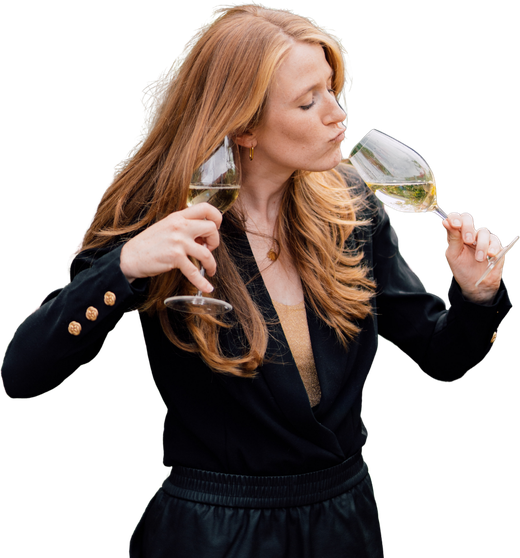
Margot van Lieshout
Wine marketeer, sales expert with over 20 years in the trade, public speaker and international wine judge. Thousands of wines scored from Steiermark to Ningxia, and a trade she knows from the inside out. Wine with Margot is where she helps wine brands tell the stories that sell them.
Want to argue about this? Good.
The conversation about every article happens in the Substack comments, together with the newsletter. Join free and bring opinions.


